Our Dynamic Line Ratings Methodology
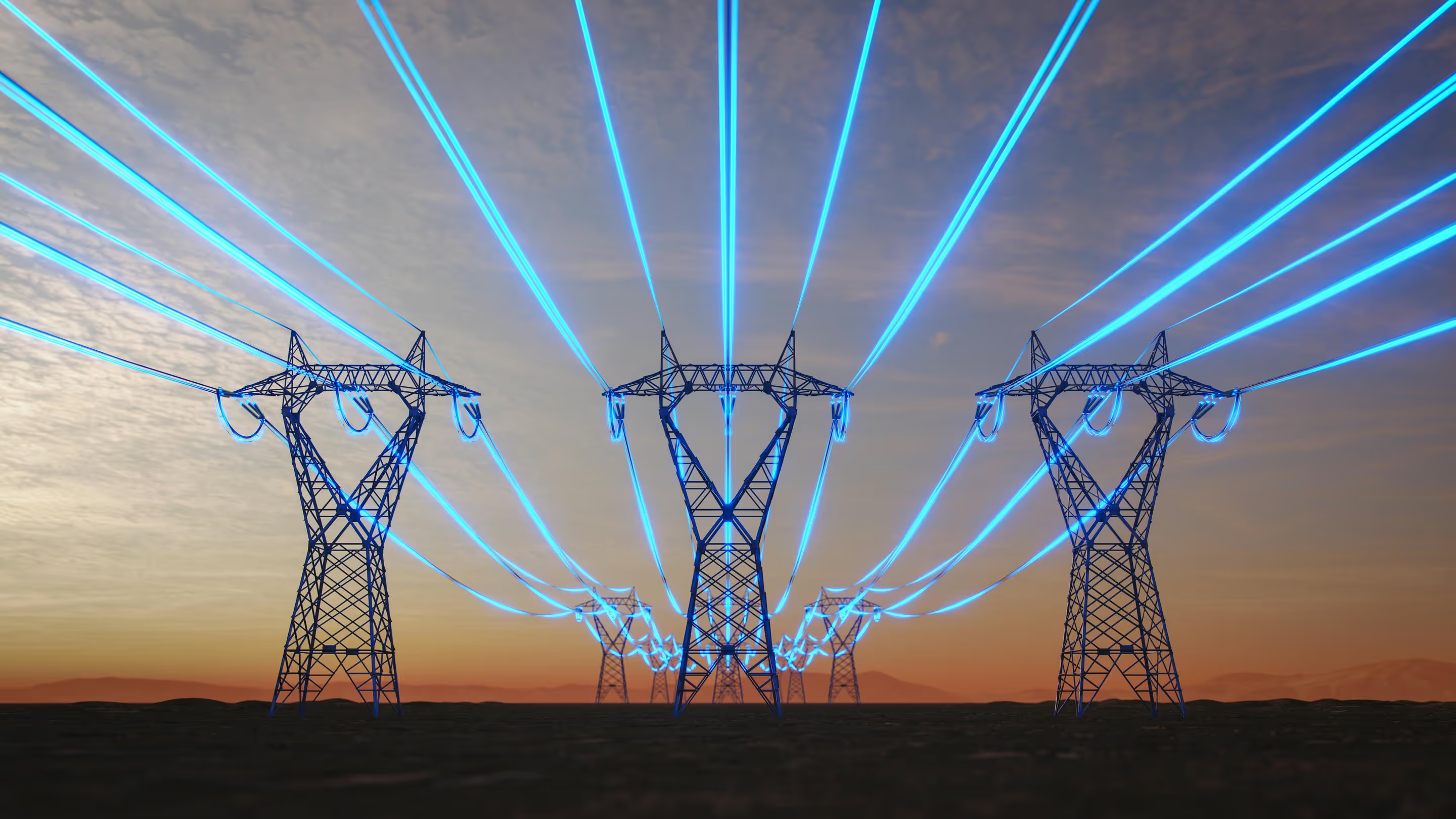
Built on years of field sensor data, our industry-leading methodology uses advanced, computational fluid dynamics (“CFD”) modeling with digital twins created from utility-provided data. Our CFD-powered approach accounts for all localized terrain, vegetation, and structures to build hyper-accurate wind models to 30m resolution, enabling highly accurate Dynamic Line Ratings across full transmission networks

Our process starts with integrating high resolution weather forecasts that incorporate multiple data sources. This numerical wind prediction serves as the base for our advanced DLR model.
Weather forecasts are further refined and downscaled using Computational Fluid Dynamics (CFD) modeling, a process that mathematically models air flow.
This physics-based approach is the most trusted and accurate way to model wind since it accounts for the effects of terrain, vegetation, and buildings on wind speed and direction that basic machine learning methods or spot methods miss.
Our CFD model is validated and calibrated using sensors in critical areas. Ground truth from sensors provides a feedback loop to enhance the accuracy of our CFD model.
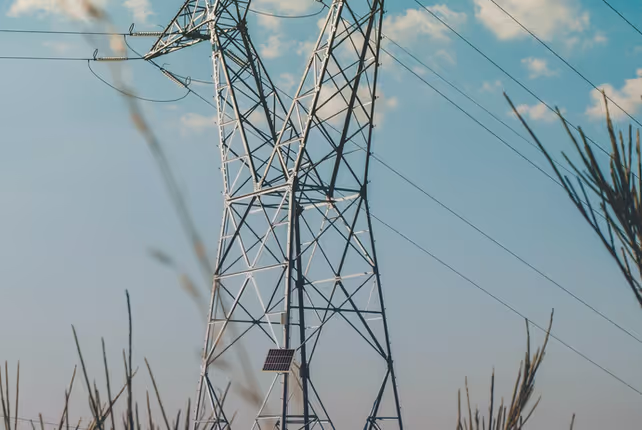
Our sensors utilize ultrasonic anemometers and optical capabilities to gather hyperlocal environmental data and monitor sag.
Connect with our grid modernization team today
FAQ's
Computational Fluid Dynamics (CFD) is a branch of engineering that uses numerical methods and algorithms to simulate and analyze fluid flow, heat transfer, and other physical processes. We use it to model how wind, temperature, and other atmospheric conditions affect the cooling of transmission lines.
Our sensors provide hyperlocal data which is used to continually assess and improve our trained ratings model. Our models are validated using comprehensive data quality checks, ensuring highest quality ratings.
Every transmission network is different. We work closely with our customers to determine the optimal locations and density of sensors based on the specific characteristics of their network.
Wind speed is measured locally using an high accuracy sensor. Numerical windspeed predictions are calculated using CFD-corrected third-party weather data.
LineVision uses IEEE 738 and concepts from CIGRE TB 498 to calculate ratings.